

Jason Nevill: building a self-healing AI homelab in Houston
I’m Jason Nevill, an IT professional in Houston, TX with more than 20 years in IT support. I build HTX-TEK, a not-for-profit family homelab where a team of AI agents reviews each other’s code, the lab watches and heals itself, and my daughters ship their own projects. It’s a personal project, not affiliated with my employer.
By Jason Nevill · Last updated
From lab bench to legacy. It started on a workbench in Houston, as a place to break things safely. It turned into a self-healing private cloud that my daughters and I build together, and we write down every failure along the way.

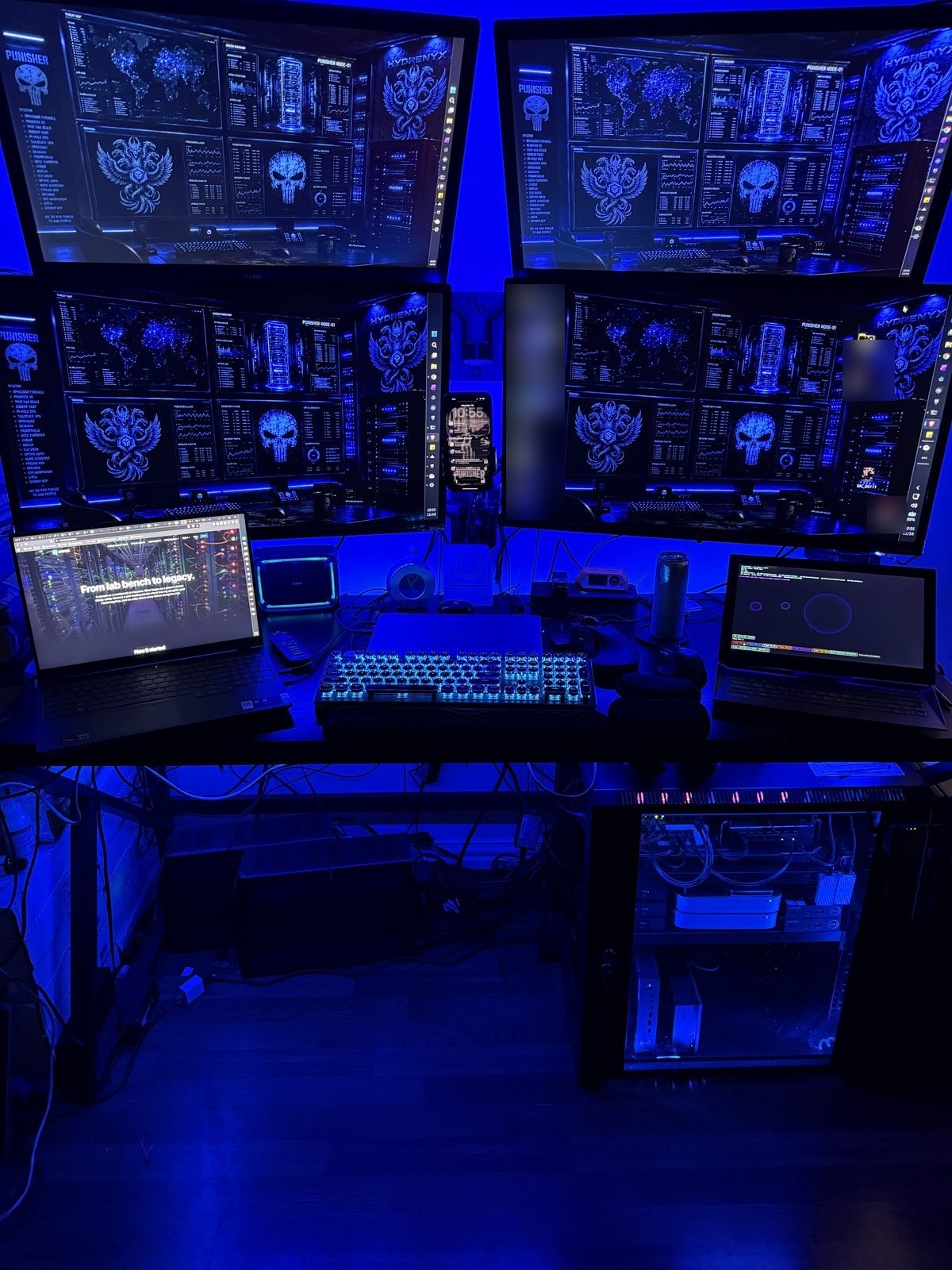
I’ve spent more than two decades in IT support, and almost all of it has been the hands-on kind: the user who can’t print before a deadline, the server that won’t come back after a patch, the backup nobody tested until the day it mattered.
That work has taken me across very different worlds, all from Houston:
- eCommerce, where downtime is measured in lost orders.
- Law firms, where confidentiality isn’t optional and a missed filing deadline is a real problem.
- Healthcare, where the systems behind patient care have to stay up and stay private.
- ITAR clients, where who can touch which data is a legal question, not a preference.
Each one taught me the same lesson from a different direction: the job isn’t keeping things running when everything is fine. It’s knowing exactly what happens when they aren’t.
Why build a homelab instead of renting the cloud?
I wanted to understand the iron. Cloud consoles hide the parts that fail at 2 a.m.: the disk that drops off the bus, the backup that silently stops, the DNS change that takes the whole house offline. Owning the hardware means owning those lessons.
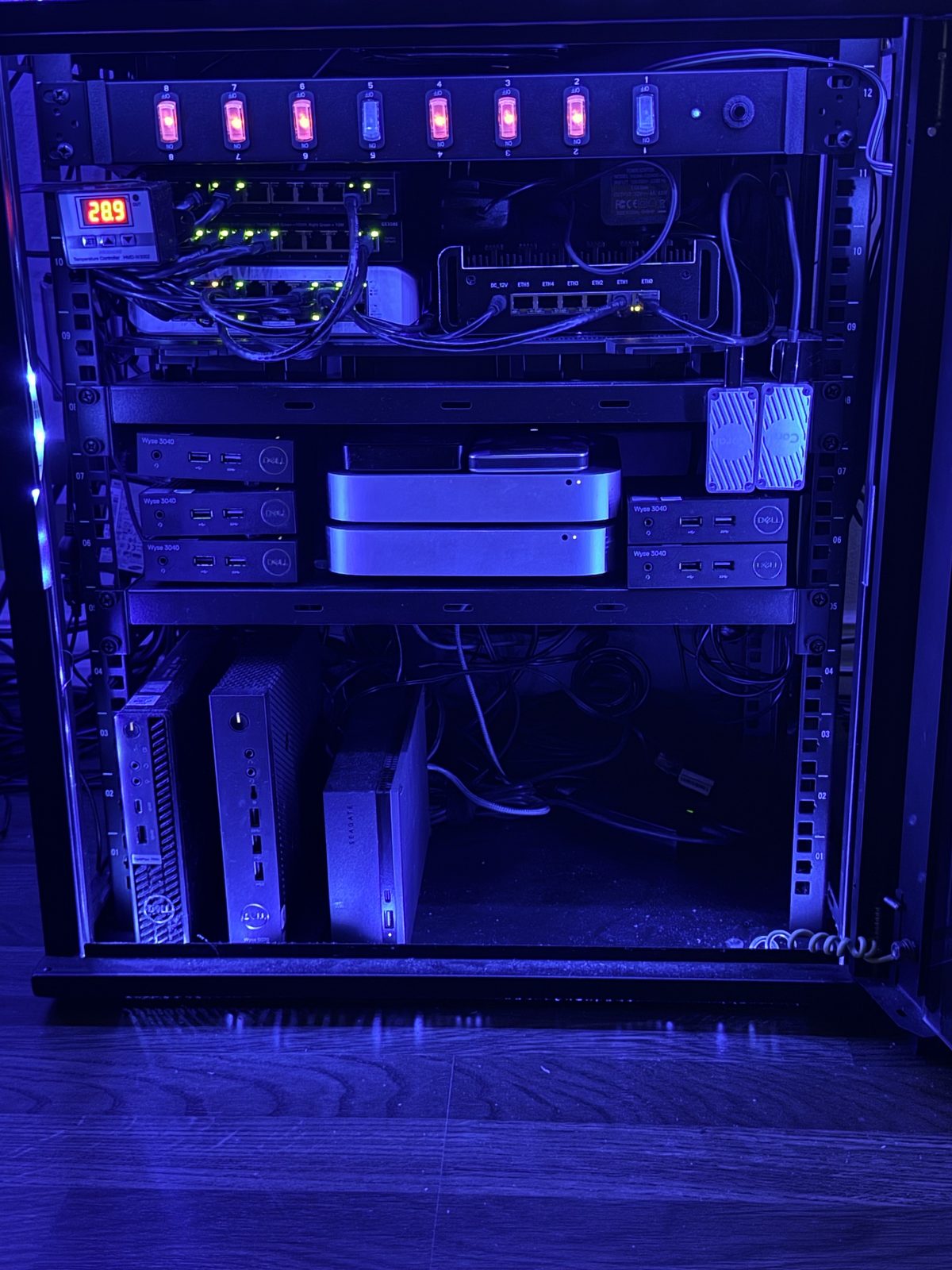
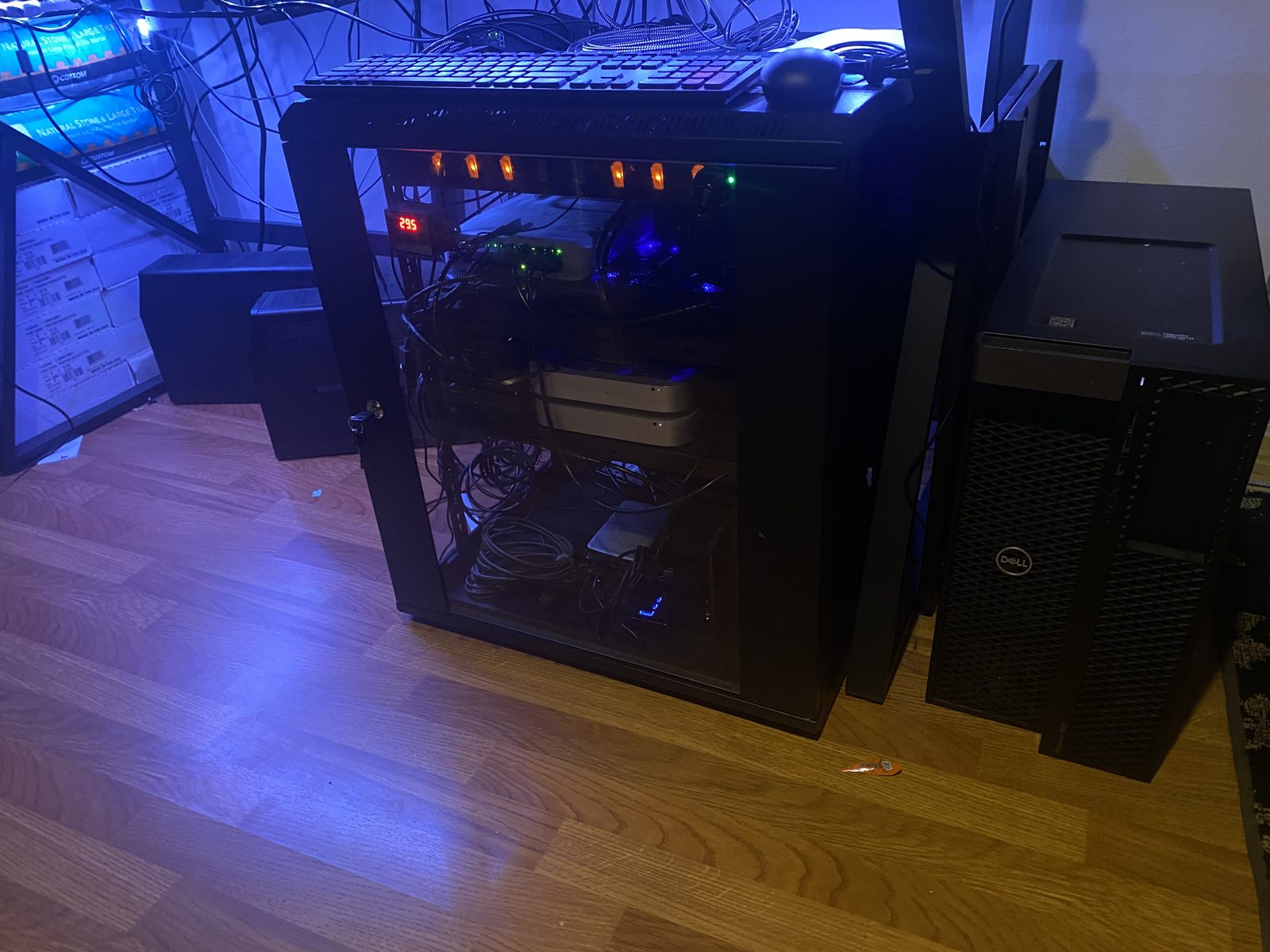
The lab started the way most do: a Dell i7 Proxmox cluster, three Intel Mac Minis for non-production work, managed switches and a couple of Windows domains. The only rule was to break things safely, so the real environments never had to.
Then AI coding agents got good enough to be useful, and the lab became something else: a place to find out, honestly, what happens when you let AI agents write, review and ship infrastructure changes, and where the human has to stay in charge.
What does the HTX-TEK homelab include?
Every part of the lab has its own page. One line each:
The AI team
- AI-Logos: four AI coding agents from different vendors take turns writing and reviewing each other’s changes; nothing merges without the author plus two peers.
- C-Suite Agents: a flat AI org chart, with Vik screening and routing requests to specialist agents.
- Hydra: the self-healing layer that watches the fleet, diagnoses alerts and proposes fixes.
Infrastructure
- Hardware: a two-node Proxmox high-availability cluster with a tie-breaking witness, GPU compute and dual UPS power.
- Software & IaC: everything defined as code with Terraform and Ansible, checked with a dry run before it changes anything.
- VPS & Self-Hosting: a hardened cloud edge as the public front door, while data and secrets stay at home.
- N+2 & Backup: two independent backup servers on site and an off-site tier, with restores actually tested.
- Command Center: one screen for the whole fleet instead of thirty tabs.
- Communications: how people and agents talk: Mattermost, Telegram, Discord, SMS and a push-to-talk voice kiosk.
Defending our own lab
- Cyber overview: how we defend and test only what we own, with written scope and two human approval gates.
- Blue Team: detection, monitoring and response for the lab.
- Assessments: hands-on reviews of our own systems to harden them.
- OSINT: checking what our own domains and accounts expose publicly.
- Red Team: attack exercises I run myself, by hand, on my own hardware.
- Purple Team: running a technique, checking what the defenses saw, fixing the gap and running it again.
- Methodology: the step-by-step process and the safeguards around the test laptop.
- Scope & RoE: the written rules of engagement every exercise starts with.
- Training: interactive modules, including an attack-replay visualizer.
The write-ups
- Engineering Blog: the build, written up as it happened, including the incidents.
How do the AI agents on HTX-TEK work together?
Three layers, each with its own page:
- AI-Logos builds and ships the lab. Coding agents from different vendors (Claude, Gemini, ChatGPT and Grok among them) take turns as author and reviewer. A change merges only when the author and two peer reviewers approve the same commit, and every deploy takes a backup first, runs a dry run and can roll back.
- The C-Suite decides what to work on. Vik, the CEO agent, screens and routes requests to the right specialist. The end goal is a C-Suite that runs autonomously; until each action is proven, it stays human-gated, and no reply means no action.
- Hydra keeps it healthy. It watches the monitoring stack’s alerts, diagnoses what’s wrong and proposes a fix for a person to approve.
Through the peer quorum, agents may create VMs and containers, make infrastructure changes and push Terraform updates. Some things never go to an agent:
Why several vendors instead of one? Each model has blind spots, and a reviewer from a different vendor catches what the author’s own model would wave through. Working with all of them hands-on, through their command-line tools, skills and Markdown instruction files, has taught me more than any one of them could alone.
Where does AI stop in HTX-TEK's security work?
All of our security work is in-house defense of our own lab. We never test anything we don’t own.
Red teaming is done by me, Jason Nevill, by hand, on my own hardware. No AI creates or runs any part of an exercise. AI is used only on the defensive side (Claude under Anthropic’s Cyber Verification Program, Defense Access): triage, ATT&CK mapping, detection tuning, remediation drafts.
Every exercise starts from written scope and rules of engagement and needs two separate human approvals. The details are on the Cyber pages.
Who else builds on HTX-TEK?
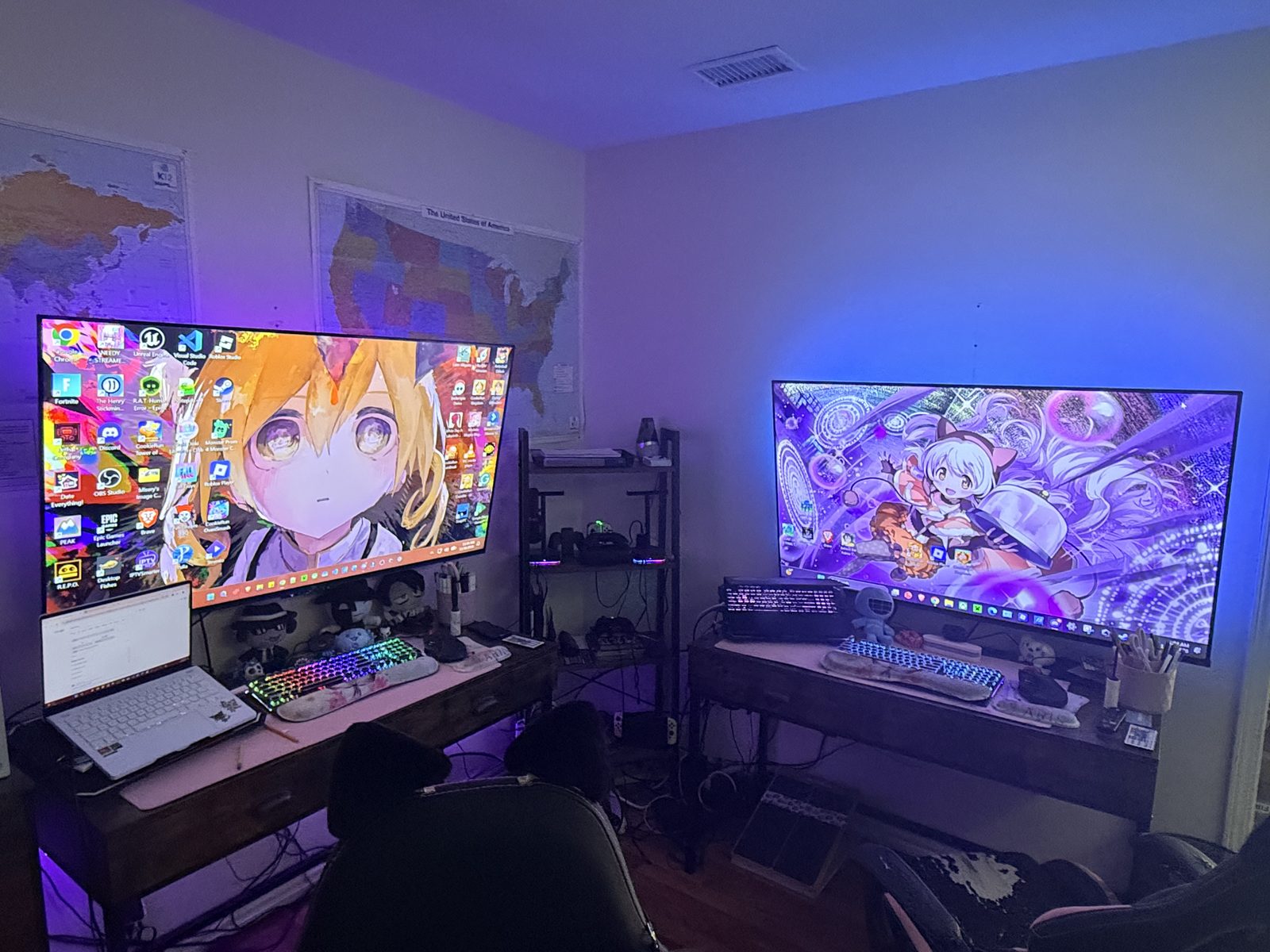
This is the part that matters most. I build HTX-TEK with my two daughters. Ansley Nevill, my older daughter, co-builds this site with me. Abby, my youngest, is just getting started, vibe coding her own Roblox games.
Both of them have their own compute, their own CI/CD pipelines and their own containers on the lab, and they use them for vibe coding, web apps and Roblox games.
They aren’t spectators; they ship on the same infrastructure the agents run on. The goal was never just a homelab. It’s a real launchpad: the same tools, the same discipline, and the same habit of writing down what broke.
What are the HTX-TEK milestones so far?
Each date is the date of the work described. Many early posts were written up later.
| When | Milestone | Read more |
|---|---|---|
| August 5, 2026 | Left Unraid for a clustered Proxmox setup | Write-up |
| August 8, 2026 | The Proxmox cluster defined as code with least-privilege Terraform | Write-up |
| August 11, 2026 | Security monitoring, fleet metrics, a private certificate authority and dual-UPS clean shutdown | Write-up |
| August 22, 2026 | A professional GPU installed for local AI inference | Write-up |
| September 1, 2026 | Humans and agents working in shared Mattermost threads | Write-up |
| September 3, 2026 | Clustered DNS, so a lab mistake never breaks the family Wi-Fi | Write-up |
| September 20, 2026 | Round-robin AI development clears a 19-PR queue with peer review | Write-up |
| October 9, 2026 | The home network split into trusted, IoT and agent zones | Write-up |
| October 12, 2026 | The author-plus-two quorum rule written down | Write-up |
| October 29, 2026 | Zero-trust access in place before anything went public | Write-up |
| October 31, 2026 | A hardened cloud edge added as the public front door | Write-up |
| November 14, 2026 | Purple-team exercise designed, and the attack-replay visualizer restored | Write-up |
What has the lab proven so far?
| Changes merged through the author-plus-two quorum | 273 pull requests |
| Rollbacks needed | 0 |
| Review loop running since | September 2026 |
| Full bare-metal node restore, tested | under 4 hours (OS install, network, restore and service checks) |
As of November 19, 2026.
I publish the misses too. The blog has incident write-ups for a backup that wasn’t, a database that filled its disk and a firewall change that locked me out, because the failures teach more than the wins.
What do I write about?
- AI code reviewQuorum math: author plus two — Why a change needs two reviewers besides its author.
- Backups and recoveryRecovering from silent VM backup failures in Proxmox — A backup that kept reporting success while nothing could be restored.
- Networking and segmentationSegmenting a flat home network — Trusted, IoT and agent zones, and what the split broke first.
- Defensive monitoringA security stack in a night — A SIEM, threat intelligence and intrusion detection stood up in one sitting.
What principles run the lab?
- Break things safely. The lab exists so mistakes happen here and not anywhere that matters.
- Nobody merges their own work. Not me, not an agent. Author plus two, on the exact commit.
- Humans hold the dangerous keys. Money, outside messages, credentials, destructive data operations, open ports and security testing stay with a person.
- Back up before every risky change, and test the restore. A backup you haven’t restored is a guess.
- Defend only what we own. Every security exercise is scoped to our own lab, in writing.
- Write down what broke. Honest status beats a clean-looking page.
What's next for HTX-TEK?
- Earning autonomy, one action at a time. The C-Suite and Hydra get more room only after each kind of action has proven itself with a person watching. The next design step is a short human window: a finding goes to chat, a person has a set time to stop it, and the system backs up, fixes, verifies and rolls back on its own if the fix fails.
- Finishing the off-site backup tier, so losing the building never means losing the lab.
- Running the first purple-team exercise and publishing the coverage results, misses included.
- A possible third cluster node for database workloads.
- More of my daughters’ projects shipping on the same pipelines.
None of this is a product or a service, and none of it is for sale. It’s a family lab, built to learn in public.
Frequently asked questions
- Who is Jason Nevill of Houston, TX?
- Jason Nevill is a Houston, TX IT professional with more than 20 years in IT support across eCommerce, law firms, healthcare and ITAR environments. He builds and documents HTX-TEK, a non-commercial homelab running self-healing AI infrastructure and AI agents that review each other’s code. It is a personal project, not affiliated with his employer.
- Is this Jason Nevill associated with anyone else of the same name?
- No. Jason Nevill of HTX-TEK is an IT & Cloud Infrastructure Professional residing in Houston, TX (with verified profiles on LinkedIn at linkedin.com/in/jasonnevill, Facebook at facebook.com/jason.nevill, and X at x.com/nevill_jason). He is not affiliated with any other individuals of the same name.
- What is HTX-TEK?
- HTX-TEK is a not-for-profit family homelab in Houston. It runs a two-node Proxmox high-availability cluster, local GPU inference, infrastructure as code, and AI agents that propose, review and deploy changes behind human approval gates.
- Is HTX-TEK a business?
- No. There’s no pricing, no services and nothing for sale. It’s a personal learning project, not affiliated with or endorsed by Jason’s employer.
- Why did Jason build a homelab instead of using the cloud?
- To understand what actually fails. Owning the hardware means seeing the disk that drops off, the backup that silently stops and the DNS change that takes the house offline, and learning to fix them safely.
- How do the AI agents on HTX-TEK work together?
- Coding agents from different vendors take turns writing and reviewing each other’s changes. Nothing merges until the author and two peer reviewers approve the same commit, and every deploy takes a backup first and can roll back.
- What can the AI agents do without a person?
- Through the peer quorum, agents can create VMs and containers, make infrastructure changes and push Terraform updates. Only a human can approve spending money, public or social media posts, outbound messages to outside parties, creating or changing credentials and secrets, destructive data, storage or backup operations, exposing a port to the internet, and authorizing any security testing.
- Does AI attack or test anything on HTX-TEK?
- No. Red teaming is done by Jason Nevill only, by hand, on his own hardware. AI is used only on the defensive side (Claude under Anthropic’s Cyber Verification Program, Defense Access): triage, ATT&CK mapping, detection tuning, remediation drafts.
- Who else builds on HTX-TEK?
- Jason’s two daughters. His older daughter co-builds the site. Both have their own compute, pipelines and containers on the lab for vibe coding, web apps and Roblox games, and his youngest is just getting started, vibe coding her own Roblox games.
- What has the lab proven so far?
- As of November 19, 2026, 273 pull requests merged through the author-plus-two quorum with no rollbacks needed, running since September 2026, and a full bare-metal node restore tested in under 4 hours.
- How can I follow Jason’s work or get in touch?
- Read the build log on the HTX-TEK blog, and connect with Jason on LinkedIn, Facebook, X or GitHub.
Follow the build
Read the build log, see how the agents work on AI-Logos, how the lab heals itself on Hydra, and how we defend it on Cyber.
Get in touch: the best way to reach me is LinkedIn. No email address, phone number or contact form on this site.
Elsewhere: LinkedIn, Facebook, X, GitHub.